Marketing Tips From The Publishers Roundtable

Book Publishers Northwest’s February 2016 meeting was a meet-up of local publishers and authors to discuss what works and doesn’t work for them. For many, the major task remains marketing. Here’s a few suggestions made during the evening and at earlier meetings in 2015.

BookBub was mentioned by several members as one of the better sites for advertising ebook deals.

Advertise In Ebook Reader Newsletters
One of the largest e-newsletters out there for ebook readers, BookBub drives sales for publishers by allowing them to advertise ebook deals to their readers. This is not an inexpensive advertising option. BPNW members suggested this marketing tactic works best for publishers of genre fiction, particularly romance, and also mentioned that it can take several months to get a slot in a popular newsletter like BookBub. Several similar enewsletter sites are listed below. Each has different requirements for the type of book that they will advertise. Some required a minimum number of reviews on Amazon. Others will only take new titles. Read directions carefully. One tip from a publisher is to spread out ads on such sites so you never have more than one ad running during a set time period. This allows easier tracking of impact than running several ads simultaneously. All of these sites depend upon an ebook version being available via a major seller such as Amazon:
robinreads.com
readcheaply.com
www.bookgorilla.com
bookbasset.com
fkbt.com/for-authors
ereadernewstoday.com
digitalbooktoday.com

Create Box Sets or Anthologies
This topic will be explored in-depth for BPNW’s March meeting. Largely used by publishers of fiction, “box sets” allow authors to partner with several people to present several ebooks sold together as a “box set.” For those with short fiction or essays, an anthology serves the same purpose.  Whether single author or multiple author, box sets are priced so that readers spend less than if they had purchased each book in the set individually. Anthologies also serve as a way that authors can reprint stories or essays previously appearing in several different publications. This technique is used to build word-of-mouth as well as better results in sale site search engines for authors. Such sets work well for “deals” in the ebook newsletters listed above.

Send Out Review Copies
A variety of websites offer ways to get digital review copies, aka galleys, into the hands of readers, librarians, and booksellers. The best-known and, according to some, most expensive is NetGalley. Unless publishing multiple titles per year, BPNW members suggested joining with other authors or publishers to defray costs. Another site that offers “giveaways” of galleys is GoodReads. GoodReads suggests running a giveaway about one month prior to publication but the timing is up to the author or publisher. Pacific Northwest Booksellers Association runs a program for publishers to send review copies to interested booksellers called Northwest New Title Preview. Information about this and other advertising programs is available on PNBA’s website.

Show Off Photos On Instagram
Instagram is all about posting images via smartphones or tablets. It can be viewed but not accessed through laptops or desktop computers. Nonfiction publishers with photo-heavy books can tease a topic with selected pictures or using pictures that didn’t make the final printed edition. Several mentioned that using hashtags (#flowers or #Seattle) are essential for building a following. It was suggested that for each photo posted that people should put three or more hashtags in the comment section.

Reader Magnets To Build Newsletter Lists
The idea of creating “reader magnets” to build a newsletter following for an author or publisher comes from a site called www.yourfirst10kreaders.com. A free copy of his tips are available from author Nick Stephenson by emailing nick@yourfirst10kreaders.com or you can watch his webinars on his site. His methods rely on building value for the reader to encourage them to sign up for an enewsletter. Said one BPNW member: “He does simple step-by-step graphics for building an email list that I really like.”

Got a tip that you’d like to share? Post it in the comments section.
Boxed Sets From LostLoves

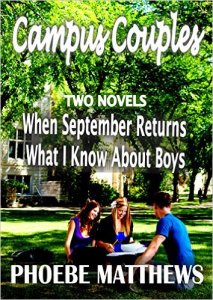
LostLoves Books’ author Phoebe Matthews announced a new “boxed set” (an e-book containing more than one novel). Getting the pieces put together went fine, according to Matthews, but somebody clicked a wrong button on the pre-ordering set up and created multiple sales dates. From her newsletter:

CampusCouplesMid January began the half price preorder for the  LostLoves BookClub boxed set, titled Campus Couples, and containing two favorites from the Rain City Romance collection, When September Returns and What I Know About Boys. Kindle will send your ebook Feb. 17. Kobo will send it the day you order it.

Umm, how do I explain this? Okay, here goes. The distributors and I managed to mangle the pre-order concept, but here is what is happening. Order the ebook of Campus Couples from Kobo any time before March 1 and you will get it for the pre-order bargain price and get it immediately. Order it from Kindle and again, the bargain price is good until March, but you will not be sent the ebook until February 17. Don’t ask. If I could explain, I would have to understand what happened and I don’t.

Matthews also placed an earlier title, Valentine Vampire, on sale. “My grandmother lived two blocks away from the location of the crime and heard the shooting. So did everyone else in the neighborhood. They all knew better than to run outside to see what was going on because that was Chicago in 1929,” wrote Matthews. “Sure, the Chicago Tribune ran detailed accounts of the action, but my grandmother heard the guns and knew how the neighbors reacted. 

 Valentine Vampire is the romantic version and is the freebie for February on Kobo, Ibooks, and Nook.”

Valentine Vampire is part of a larger series, Turning Vampire, originally published by Dark Quest Books and now being reprinted in boxsets by LostLoves Books, a member of Book Publishers Northwest.

How to submit an article about your adventures in publishing: send your newsletter, press release or story to bpnwnews at aol.com.


Local Publisher Launches Souls Newsletter

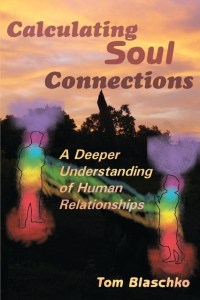
BlaschkoBookTom Blaschko of Pine Winds Press/Idyll Arbor (and treasurer of BPNW) is writing a book with the working title We All Have Souls and I Think I Can Prove It. It will have a model of the soul and evidence from a diverse set of areas including scientific research, reincarnation, ghosts, martial arts, energy healing, subtle activism, shamanistic practice, and more. They are all tied together and support the evidence from each other. Religion is mentioned, but it is definitely not a religious book. It’s planned to be out in 2016. Blaschko previously authored Calculating Soul Connections about human relationships.
As part of the writing, Tom is sending out a biweekly newsletter on topics related to souls and the life force. If any of the topics sound interesting, he’d like to have you sign up to receive the newsletter. You can even send in questions you would like answers to.

To sign up go to http://WeAllHaveSouls.com and fill out the newsletter form with your name and email address. You can even click the Facebook Like button for the We All Have Souls page while you’re there.

Parenting Press Uses Pinterest Boards

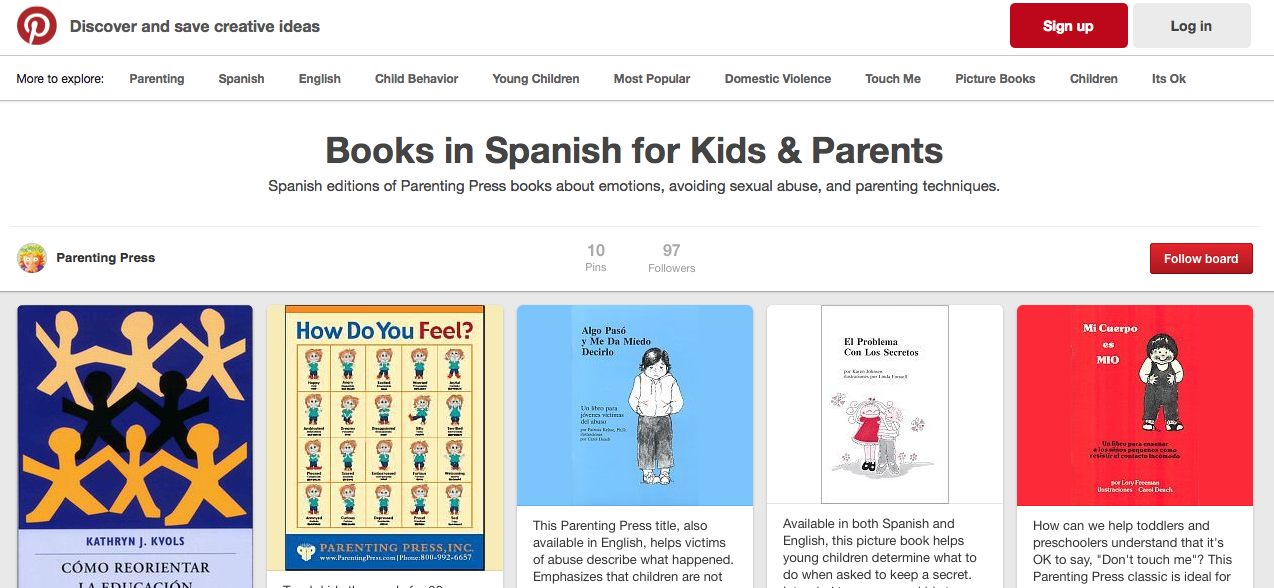
Parenting Press uses Pinterest boards to help parents and teachers find titles of interest. Their newest Pinterest page shows off its Spanish and bilingual books. Pinterest is a photo-bookmarking platform with a 100 million subscriber base. Among social media advertisers, it is seen as a alternative to Facebook and Twitter. Setting up Pinterest pages is free (for now) and material can be sorted by categories such as Parenting Press has created:

BPNW  member Parenting Press shows off Spanish titles on Pinterest

BPNW member Parenting Press shows off Spanish titles on Pinterest

Guest Article: Typesetting. Who Needs It?

by Rosie Gaynor

If your text is long—and if you want it to be read—then chances are it’s going to need some typesetting.

How much?

An easy way to decide how much time and money to devote to typesetting is to consider your choice of printing house and paper stock. For text that is meant to be read, I’d recommend that…

  • The typesetting be as good as or slightly worse than your printer. A bad print job is going degrade your type, so it’s worth paying for good printing.
  • The typesetting be as good as or slightly better than the stock. Good stock cannot cover up bad typesetting. Good typesetting, on the other hand, can help the reader forget a lesser stock. (Bad stock can degrade the type, though, so go for stock that is at least good enough.)

It feels so heartless to do this kind of triage, to engage in lowly budget-based bargaining when books are involved. But our goal is to get the book out the door and into people’s hands without losing our shirts (or hair), so we do the very, very best we can with the resources we have at the moment.

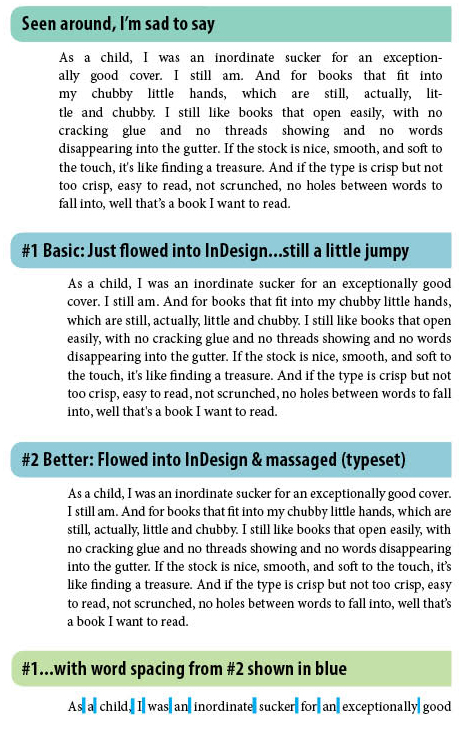
The illustration below shows the difference typesetting can make. (To really see the difference, download the PDF and print it on a good printer.)

BPNWRosieGaynortype

Book designs differ, but usually a good typesetter’s goals look something like this:

  • Word spacing, letter spacing, and line length work together to create lines that read evenly and easily. (It is important to see a print-out of this. An onscreen PDF is not going to show you what you need to see here. Print out the PDF of the sample above and you’ll see for yourself how big a difference it makes to view type printed on paper.)
  • Hallmarks of good typography have been considered, such as curly quotes, hanging quotes, curly apostrophes instead of prime symbols, proper use of hyphens, en-dashes, em-dashes, and real small caps (instead of InDesign’s approximated small caps). Old-style numerals, lining numerals, proportional numerals, and tabular numerals have been used purposefully.

DIY? Maybe.

If you are used to looking carefully at type (say, maybe, you’re an editor?) and if you’re comfortable on the computer, you could probably pull off something like Example #1 above on your own. I did, years ago, before I took design classes.

You’ll need to know the basics of InDesign and you’ll need to have a good feeling for what typeface and type size fits your text block well. If you go this route, I’d highly recommend you take a short class in InDesign (at, say, my favorite: School of Visual Concepts in Seattle) and that you find a copy of Mitchell & Wightman’s Book Typography: A Designer’s Manual. (It’s a gem of a book, content-wise and beauty-wise. Just turning the pages—a Precision fine 130 gsm stock—is an experience!)

Example #2 above? That kind of work takes some training and a really good eye. And it takes time. And dogged patience. Generally speaking, it takes a pro.

If you do hire a typesetter, ask to see a hard copy of a book that s/he has typeset. One page is not enough, as you’ll want to see how s/he managed the awkward paragraphs. (There are always paragraphs that refuse to cooperate.) With that book in hand, you’ll also be able to tell whether s/he had the stamina to make the type look even throughout the entire piece. If you go with a printing company’s in-house typesetter, ask to see a sample book done by the person who will be working on your book. They might fuss a bit, but I’d ask anyway.

How Much Do Typesetters Charge?

Typesetting fees are all over the place. But, like olive oil, cheese, chocolate, and shoes, the cheapest ones are generally not the best. The 2013 Graphic Artists Guild Handbook of Pricing and Ethical Guidelines suggests $6–$12 per page for a simply formatted book, like a novel. Figure $900–$1,800 for a 150-page novel.

It’s daunting. I think it helps to consider the printing–stock–typesetting balance. And to go back to the very basics: What makes the most sense for your goals, for your budget, for your preferences, and for your timeline? What’s your gut telling you?

Why bother? Because good typography will set you apart.

Scribes of old knew: Well-drawn pages paid respect to the words and to the author. Eventually, we figured out that well-set pages allowed for easier reading, greater comprehension, and better sales. And we book lovers today still know: When we hold a well-set book in our hands, we are holding a treasure.

We live in a world of typographical atrocities. Alas. But it’s also true that we live in a world of near-perfect typographic masterpieces. Your book will be somewhere on that typographical spectrum. The nice thing is that you get to choose where.

Rosie Gaynor owns Seattle Scriptorium—the business of beautiful communication. She has worked in the design departments at Tiger Oak Media, Puget Sound Business Journal, and TCS World Travel. She has typeset three books and would love to work with you on yours. She can be reached at rosie[at]seattlescriptorium.com.

Are you a publishing professional or a service for publishers? Would you like to submit an article to Book Publishers Northwest? Email bpnwnews[at]aol.com.

Several Ways To Avoid Formatting Headaches

blankbook_freeimagesOne of the most frequently heard questions at BPNW meetings boils down to “is there an easier way to do all the formats that we need?”  Here’s some suggestions that have popped up recently during meetings or online discussions. We welcome comments about user experience (please keep them polite as well as forthright) and suggestions from those reading the blog.

Smashwords
In Internet years, this site for creating and distributing ebooks to a variety of vendors is practically ancient. Everything is based upon having a manuscript in Microsoft Word and there is no fee for using their “meat grinder” to reformat for various vendors. Instead, Smashwords retains a percentage of the list price for every book sold through their site.

Draft2Digital
This service is used by LostLoves Books and mentioned by a couple of other members as less cumbersome than Smashwords. There are no fees for formatting or distributing an ebook. Draft2Digital handles the conversion from a Word doc and listing on ebook sales sites. They keep about 10% of the retail price whenever a book is sold.

Bookalope
A newer service promising “interactive and smart software tools that help you with the style analysis and the extraction of structured content from your book’s manuscript, with cleaning up and checking the text for many different punctuation and spelling problems, and with generating e-books for different devices and for print.” Fees vary based on quantity. Not currently used by any BPNW members (that we know of) but they have reached out to the group to alert us to their service.

Book Design Templates
For those who like to keep everything in Microsoft Word, this site has a number of templates for purchase that are suitable for creating manuscripts for print-on-demand services like Create Space or Lightning Source. Templates run around $37 for most styles and members who have used this site report that queries about issues receive a quick response.

Canva
This graphic design site has basic templates for ebook covers. Users can upload their own images or purchase stock images for $1.

Lynda.com
This educational service is available for free through the Seattle Public Library and many other institutions or by subscription for as low as $20 per month. Lynda.com provides video tutorials on how to create both print and ebooks by using such popular software as Adobe’s InDesign or Apple’s IBook Author.

Guest Article: Resources for Publishing Success

Posy150headshotby Posy Gering

What resources do you need to overcome the barriers to publishing success? Perhaps, you might identify with one of these:

  • I hate asking people for things
  • I’m not being successful unless I’m being published by a NY publisher
  • I can’t publish because I don’t have reviews or blurbs
  • It seems like none of my pitches are landing … I’m frustrated
  • I write and write and write, but nothing is finished
  • I have piles of ideas about how to market my book, but I never get around to it

April’s meeting was a unique approach to our community – we focused the wisdom of our group to help one another and build community. What we did was talk about some of our current challenges, then, each person had an opportunity to get feedback on one of them. Here is some feedback from attendees about the exercise I offered:

“The Board of Advisers activity allowed me to receive valuable, constructive feedback as a writer in a warm environment with likeminded people,” reflected Dara Bramson. “The activity was especially useful because it encouraged both a dialogue with the writer and board, as well as an opportunity for all participants to listen, process, and express themselves.”

“This exercise went beyond the standard writer critique. It’s interesting to see how the group dynamic is used and how a simple thing, like having the person face away from the people giving advice, helps focus the process.” commented Rosemary Jones.

Dara also commented, “This was my third BPNW meeting, which was especially enriching on a personal level because of Posy’s leadership. Past meetings have been very useful as well and I find BPNW to be an excellent resource for writers and publishers alike.”

I find this exercise particularly useful because it taps into perspectives you might never hear. Those who stepped up with a challenge walked away with fresh, relevant, actionable strategies.

About my approach

I design experiences to include and engage everyone in the room and help them work at the top of their intelligence, together. I help people work more creatively and productively, so they can uncover the unexpected sources of great ideas or to solve seemingly intractable issues.

If you, your team or organization needs new ways to solve persistent challenges, please contact me.

Of course, I’d be happy to do a presentation or brown bag about The Leadership Moment, which I define as how you respond when “stuff” happens. My book, The Next You, Discovering Confidence, Calm and Courage, Now, outlines fifty ways to do it differently.


Jusino Heads To Pyrenees

Jusion_digitalcovIndependent publishing consultant and editor Beth Jusino announced in her newsletter that her March 9 “Guide to Getting Published” at UW’s Experimental College will be her last workshop for a few months. In April, she’s off to hike the Camino de Santiago, the ancient pilgrimage trails that run from France to Spain. “It’s taken a long time to work out all the details, but the tickets are finally bought and it’s official,” wrote Jusino, who plans to walk with leave in early April for a three-month, 1,000-mile walk.

While she’s certain that there will be a book after this trip, probably about this trip, she’s taking a break after her March session to prepare for her upcoming hike across the Pyrenees. Jusino will return to Seattle in July, just in time for the Pacific Northwest Writer Association’s annual convention.

Until then, if you can’t make one of her workshops,The Author’s Guide to Marketing (Kindle version) is just 99 cents this week (February 16-23).

Talking About A Career In Words

Book Publishers Northwest member Beth Jusino recently spoke at GeekGirlCon along with Rebecca Brinson and Amanda Vail from the Northwest Independent Editors Guild. In this discussion at a convention for women interested in the future and jobs in technology, their publishing discussion veered toward how Seattle could  change the business model and “blow New York out of the water” in the 21st century: