Publicist Finds Our Region Very Book Friendly

Publicist Jenni Tyler promotes the books of Arcadia Publishing. Her “territory” is the West Coast so we took the opportunity to ask her about promoting books and authors in our region. Here’s what she had to say about her job and our friendly book scene.

How did you become a publicist?

I always knew that I wanted to work in publishing, but I initially thought I wanted to be an editor. I attended the Denver Publishing Institute at the University of Denver in 2010, and there I got to see what each role was in the book publishing process. And I just fell in love with publicity. At the time it seemed so glamorous getting to speak with the media and go to events. After DPI, I ended up moving to Charleston, South Carolina and saw that Arcadia Publishing had a job opening in their publicity and marketing department. I’ve been there ever since.

Could you tell us a little about your job for Arcadia Publishing?

Arcadia Publishing is a publisher of local history books, and as such we very much work by territory. I manage the West Coast for publicity and marketing. I reach out to and work with the media, and set up events for my authors to give their book the best coverage possible. Our books are different in terms of publicity because they are so localized – while we would love to see our books reach a national audience, the local audience is going to be our primary audience.

How many books are you currently promoting?

I’m currently working on about 25 books. We work on a rolling schedule so I always have books that have already published, are about to publish, and are pre-publication.

How would you describe the book culture of the Pacific Northwest? 

From what I can see from my vantage point, the PNW is made up of readers. Most of our books do well there. I can only speak to this from that local history perspective, but it seems like people love to learn about the history of their towns and the stories surrounding them. Maybe it’s the rainy/foggy atmosphere, it definitely makes great reading weather!

Is it easier or harder to promote a book in the PNW than other regions?

I have worked on the East coast and the Midwest to promote our books, and I would say it is definitely easier to promote in the PNW. Everyone is generally enthusiastic about seeing new books come through and there is not as much competition when it comes to booksellers. The East coast is so small and congested, it feels like there’s a bookstore on every other corner (which, as a book-lover, I fully support!) but that makes it hard to market. If a bookstore has a signing event, the other bookstores within a mile radius aren’t going to also want to host the author because it will bring in the same (but smaller) audience. Whereas in the PNW everything is a little more spread out without taking hours to get between locations.

What do you think is the best thing a publisher or author can do to get their work noticed?

Social media is key these days. Authors need to have a strong social presence to get noticed. Again, our books are very localized, so the media attention we get are also localized (think the local paper or a regional radio station) – so in order to get noticed by a broader audience you have to have a strong social media presence (both the author and the publisher).
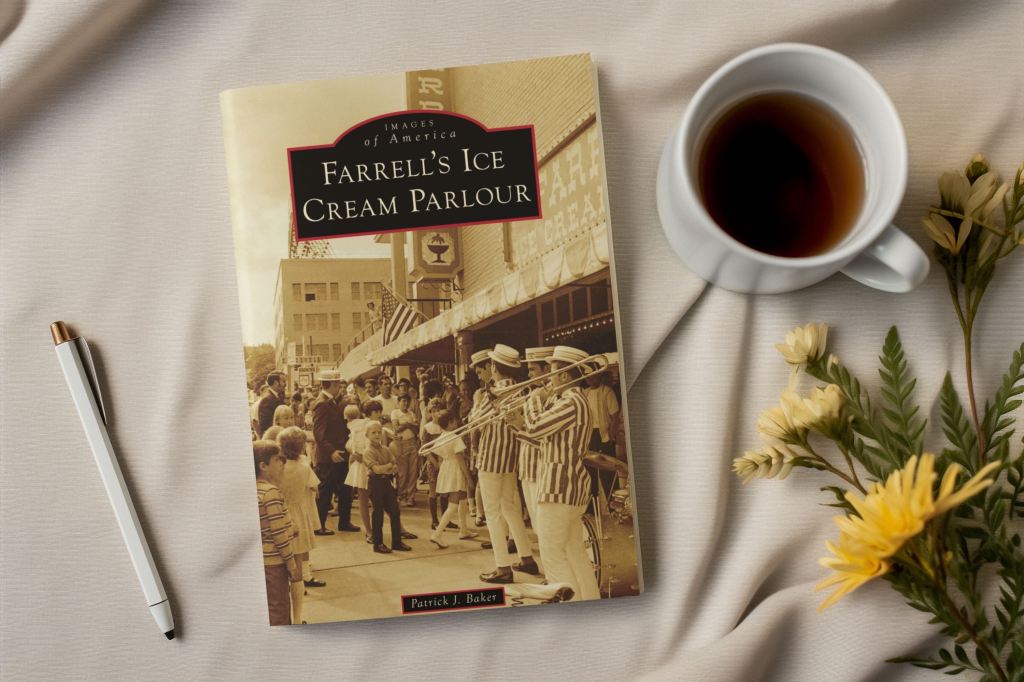
Picture of Jenni Tyler and Arcadia Publishing book courtesy of Tyler. To find out more about Arcadia Publishing, visit their website at https://www.arcadiapublishing.com/. Please note an earlier version of this article was attacked by autocorrect and misspelled Tyler’s last name. Our sincere apologies!

Lost Loves Books maintains Book Publishers Northwest News. If you’d like to support this free newsletter/site, you can tip us through PayPal. We suggest $5/year because a cup of cheap coffee will keep our very human writer fueled and looking for new stories.

If you have an idea for a story, please drop us an email at bpnwnews at aol.com.

Engaging Readers Through Fun Events

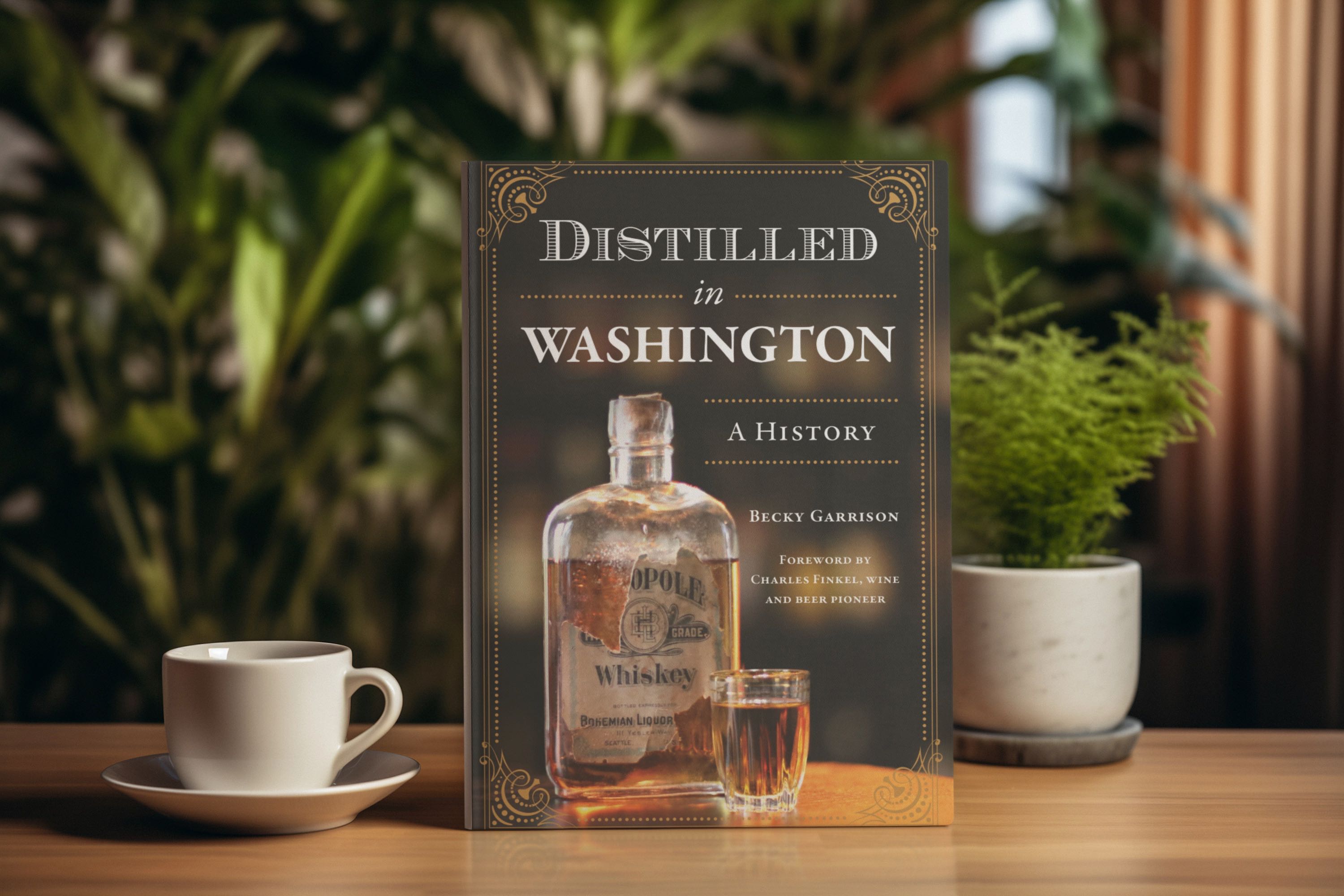
Becky Garrison’s latest book, Distilled in Washington, delves into the fascinating history of making liquor, especially American Single Malt. With a topic like that, Garrison finds herself giving presentations throughout the region that go outside the standard reading and book signing (she does those too!). We asked Garrison for a few tips on engaging readers no matter what size the audience.

Distilled in Washington: A History was published in 2024 by Arcadia Publishing. Garrison will be speaking on “How Whiskey Won Western Washington” at McMenamins at Anderson School in Bothell, WA, on June 25. Doors open at 6pm. For more information see McMenamins’ website at www.mcmenamins.com.

How long a presentation do you normally give?

What I do varies depending on the venue and the audience obviously. 

For my upcoming presentation with McMennamin’s Anderson School I’ve been asked to give a 50-60 minute lecture with slides allowing 5-10 minutes for questions. The crowds who come to a History Pub expect to leave being informed with both words and visuals. A whiskey tasting is preceding this event, thus making a very easy transition for tasting to talk. 

If the audience is expecting a typical author book event, I try not to read more than 20 minutes, and then use the remaining time to engage the audience. That said, I will have additional sections flagged that I can read if the audience would prefer that I do the talking. 

Should I get a very small crowd where reading to say a few folks feels “weird,” I will switch to a more conversational tone by asking them questions that I will then answer extemporaneously. That said, I will tune in and read from the book if I sense this is what they want. 

When I’m part of a festival such as Portland Book Week where folks are coming in and out, I keep it loose. If a crowd starts to gather, then I’ll do a reading. If it’s just a few folks coming in and out, then I engage with them individually. 

How are you working with Washington distillers?

I’m planning some events with distillers that are timed with their new releases. In these cases, they will do a guided tasting followed by me explaining the history behind what they’re drinking in that glass. These presentations are very interactive will last as long as there’s audience interest. 

Also, I will be at the next Washington Distiller’s Guild annual tasting event called Proof. For events like this, the presentation is a short elevator pitch of less than 60 seconds as this is a party not educational space. That said, I will offer to do a slide show of photos from my book or other interactive ways to engage the audience in a fun and playful manner. 

What do you think is the best way to do a presentation on a subject that keeps the audience engaged and sells the book?

Think interactive. Unless I am doing a formal lecture where the Q&A is not expected until I end my speech, I open by asking the audience questions relating to my book such as “How do you define whiskey?” When possible, I bring along a friend who has agreed to function as a social lubricant by breaking the ice in answering the first question or two. 

If a venue will permit me to serve liquor, I will bring along a few bottles of whiskey along with promotional materials about these whiskeys. I’ll open with a spirits tasting to get the vibe going and then ease into the reading as applicable. When I attend an event of this nature, I will don a T-shirt from a WA State distillery featured in the book. 

I have on hand pins and literature from the American Single Malt Whiskey Commission for those who like to take something home. I hold on to items that have a fiscal value such as coupons for free tastings, and distribute on an individual basis. 

Also, I bring along postcards of the book with a QR code on the back where folks can order the book. If the venue can sell the book, then I bring along postcards that don’t have a QR code.  I’ve chosen not to sell books myself as I still have a few too many books from my last book that came out in March 2020. Simply put, I learned I’m a writer not a marketer and that self-publishing or even semi-traditional publishing isn’t the route for me. 

Do you vary your presentation to fit your audience?

Of course. Here I rely on the advice given to me by futurist Brad Sargent when I was preparing to give a talk at the 2009 Slot Festival in Poland. I knew hardly anyone there and was concerned that no one would come to my talk. He said, pray that those who need to hear what you say will come, and that those whose contributions would be disruptive stay at home. This advice continues to serve me well as it keeps me from getting upset if an event doesn’t achieve the desired results. 

When people come to events, what is the most frequent question that you are asked about Distilled in Washington?

When most people think of the Washington State’s food and drink culture, they conjure up images of suds or Syrah, not spirits. Hence, they tend to be surprised (and even shocked) wen I inform then that Washington State is one of the leading states in terms of the number of distilleries, and that this is the first book to record the history of distilling in this state. In particular, they are often not aware of the Pacific Northwest’s role as a leading player in the evolution of the American Single Malt category, and how PNW brewers are playing a unique role in the creation of this category. They seem to take pride in learning how this development that has put the PNW on the map as an international player in the whiskey world. Along those lines, they groan a bit when I let them know that this state also has the highest distilling taxes in the country. 

Also, whenever I chat up the book, inevitably someone will come up to me and say to me in a whispered voice that their relative was a moonshiner or bootlegger during Prohibition.  I encourage them to delve into their family’s history and tell their stories in the hopes that through such storytelling, we can connect to our past filled with pride for our badass ancestors and not become consumed with shame for coming from such lawless stock. 

Where’s the most unusual or fun place that you have or are talking about Distilled in Washington this summer?

I am delighted to be asked to give a presentation at McMennamin’s History Pub on June 25 since an academic type presentation is a deviation from the typical book reading. Also, I’m looking forward to doing some joint events with Copperworks at both their Kenmore and Seattle locations as it’s exciting to see people connect with both the stories in the book and then the distiller pouring the whiskey that was informed by these stories. 

Distilled in Washington photo courtesy of publisher Arcadia Publishing. Photo of author Becky Garrison (top) courtesy of author.


Lost Loves Books maintains Book Publishers Northwest News. If you’d like to support this free newsletter/site, you can tip us through PayPal.

Alaskan Writer Promotes Three Books Simultaneously

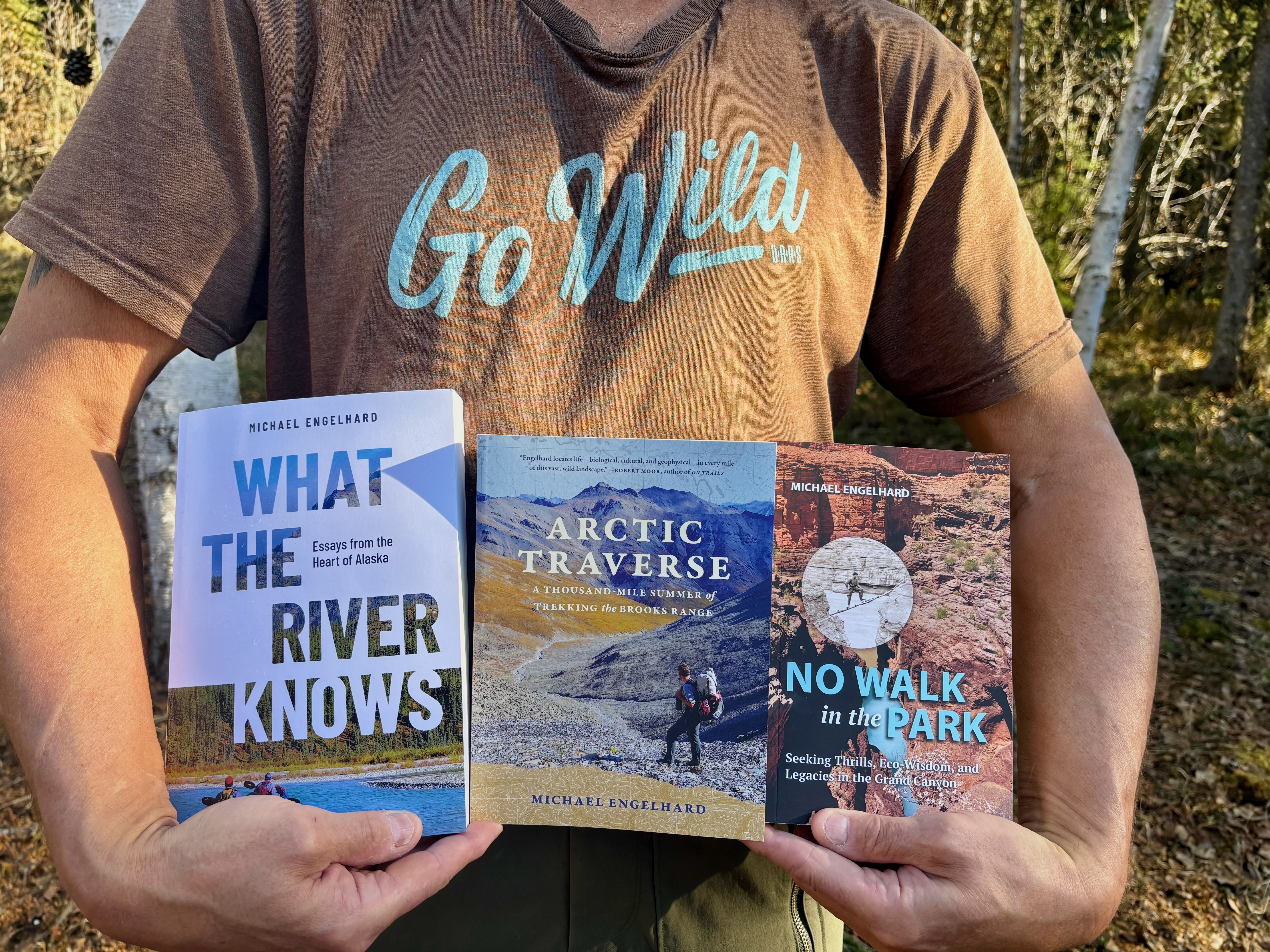
Michael Engelhard has three new books out in 2024. Two are based on his life in Alaska and published by Pacific Northwest companies: the memoir Arctic Traverse (Mountaineers) and What the River Knows (Hancock House), an essay collection.

His third book this year explores the Grand Canyon. For No Walk In The Park:Seeking Thrills, Eco-Wisdom, And Legacies In The Grand Canyon. Michael decided to publish the book himself under the imprint Corax Books.

Trained as a cultural anthropologist, Engelhard has worked 25 years as an outdoor instructor and wilderness guide in Alaska and the canyon country. He is the author of 12 books.

Throughout the year, Engelhard plans to strategically schedule events to cross-promote all three titles simultaneously. We recently did an interview via email on how he came to have three books out in one year and what’s the best way to promote that many titles. You can learn more about all his titles at michaelengelhard.com.

Photo of books courtesy of Michael Engelhard

Interview with Michael Engelhard

Why did you settle in Alaska?

I came to Alaska as an exchange student from Germany in 1989. I had wanted to live “up north” for a very long time—too much Jack London at a susceptible age you could say. I fell promptly in love with cabin life in Fairbanks, the Native cultures, and the immense swaths of public lands, especially in Alaska’s Arctic, all of which have inspired me ever since. My memoir Arctic Traverse and the essay collection What the River Knows are only the latest in a number of books and articles that have sprung from my fascination.

Why did you decide to bring out three books this year?

For starters, 2024 marks the centennial of the first official Wilderness (in the Gila National Forest, New Mexico), pushed for by the proponent of a “land ethic,” Aldo Leopold, a whopping four decades before the Wilderness Act. And most of my writing and much of my life is centered on the dual concept of wildness-wilderness. So, publishing three books on the subject this year feels like an appropriate commemoration. On a practical level, it allows me to cross-promote these books simultaneously.

Which came first: wilderness guide or writer?

 Actually, anthropologist came first. Working with Alaska Native peoples, I discovered an interest in storytelling and what I call “the symbolic dimensions of landscapes” —place names and related myths, cognitive maps and ways of wayfinding, the lived experience of a landscape beyond subsistence activities. I only became a wilderness guide after I taught briefly at the university and found that for me, an indoor classroom is not the best setting to educate (and entertain) people. Also, while I worked on my Ph.D. I spent more and more time in front of computers and less in the outdoors, doing fieldwork.

What has been the greatest challenge in promoting your work?

It is hard to decide what kind of thing to focus on: ads, reviews, guest blog posts, excerpts, podcasts, interviews, readings, appearances at conferences and book festivals, etc. The efficiency of these promotional activities can be hard to determine, since sales reflect their cumulative effect. Currently, my biggest challenge is to promote my Grand Canyon book, No Walk in the Park, while living in Alaska.

What do you think is the easiest thing for an author/publisher to do to promote new works?

It’s important to cultivate personal relationships in the industry over the years, with people very likely to respond positively to a particular new book, to prevent having it end up in the slush pile. The easiest thing that works, for an author, is to meet his or her readers at book events. You’re trying to sell yourself as much as you do a book.

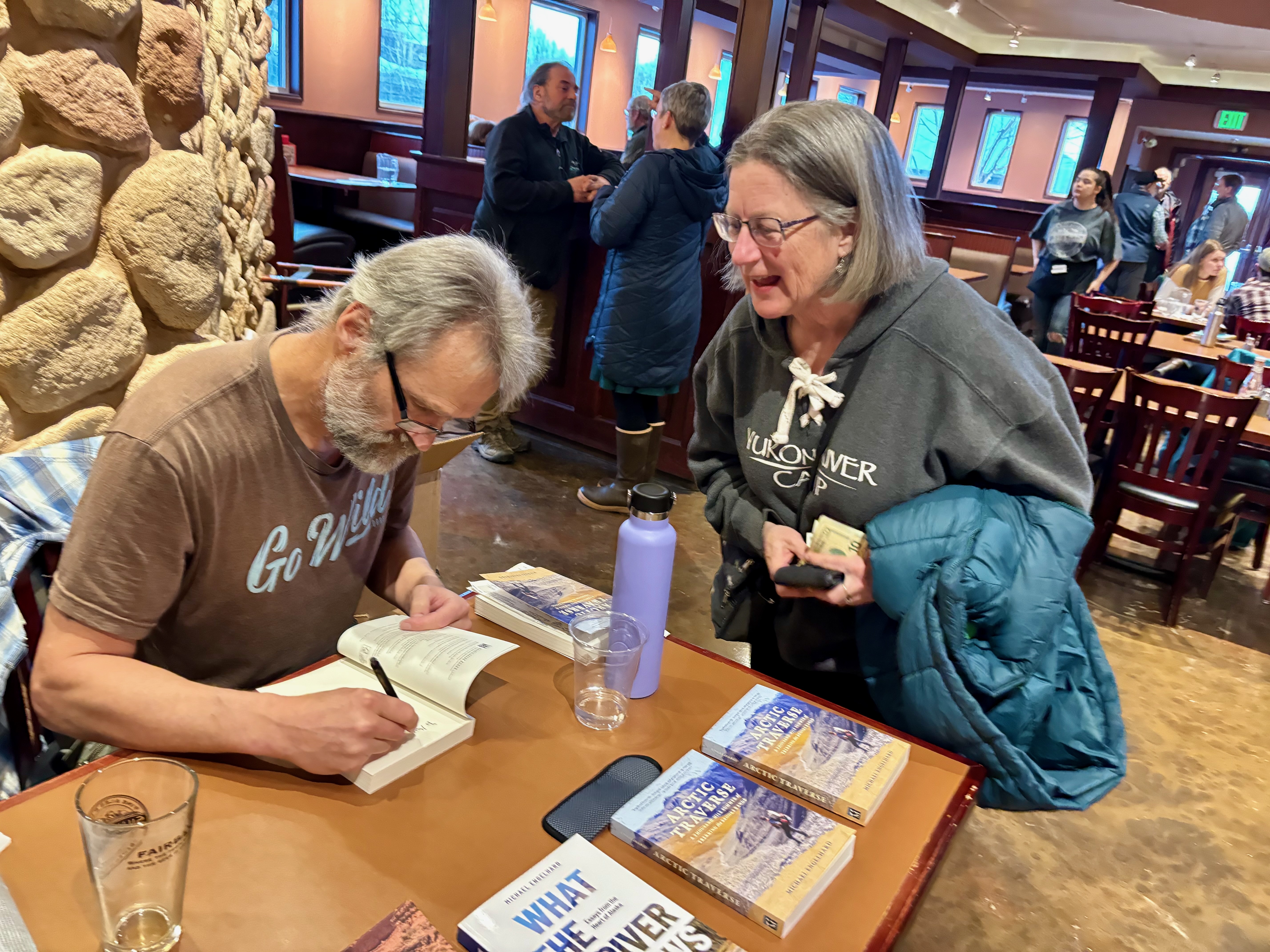
Photo of Michael Engelhard at book signing courtesy of author.

PNBA Exhibitor Registration Opens

Pacific Northwest Bookseller Association’s September tradeshow returns to Oregon in 2024. Show dates are September 29 to October 1 at the Holiday Inn on the Columbia River, Portland, OR. Attendees will be bookstore buyers and librarians from the Pacific Northwest. Publishers and those serving the bookstore trade are encourage to display their upcoming titles as well as backlist.

The schedule is once again designed to keep attendees focused on reps and the show floor during all exhibitor hours, says PNBA’s recent call for exhibitor registration. PNBA will promote a profile of each exhibiting company on the official Tradeshow page.

Exhibitors will also receive website and show program listing for any author appearing in their home space during the first night Explore the Floor reception.

For details and more information on tradeshow, see pnba.org/venregform.html.

Exhibitor registration must be completed by July 12, 2024.


Have Fun in June at Kent Nerd Party

Local authors and indie publishers specializing in science fiction, fantasy, and horror will be partying in Kent on June 1. The Kent Nerd Party features a cosplay contest, Lego museum, indoor and outdoor vendors, and more. Small businesses on 1st Ave S and Meeker St will host local makers, artists, authors, and exhibits.  

Among the authors expected is Nathan Crowder, creator of Cobalt City (currently being published by DefCon One). Meet the creators of Offscript, a podcast where the hosts read different books that have been adapted, watch the corresponding movie, and compare the two. Participating Kent businesses include Retro Emporium featuring vintage 80s/90s collectibles and retro themed goods; Page Turner Books offering sci-fi, fantasy, mystery, movies, and more; Big Wu’s Gym hosting SeaLUG; and Sweet Themes Bakery serving sweet, nerd-themed treats!

The fun begins at 2pm on Saturday, June 1, and runs until 7pm. Vendor tables will be located inside and outside vendors on 1st Ave S between W Gowe St and E Titus St. The Kent Nerd Party takes place throughout downtown Kent at participating businesses.  

To learn more, visit www.downtownkentwa.com/event/meeker-street-nerd-party-2/.

Seattle Art Book Fair Returns in May

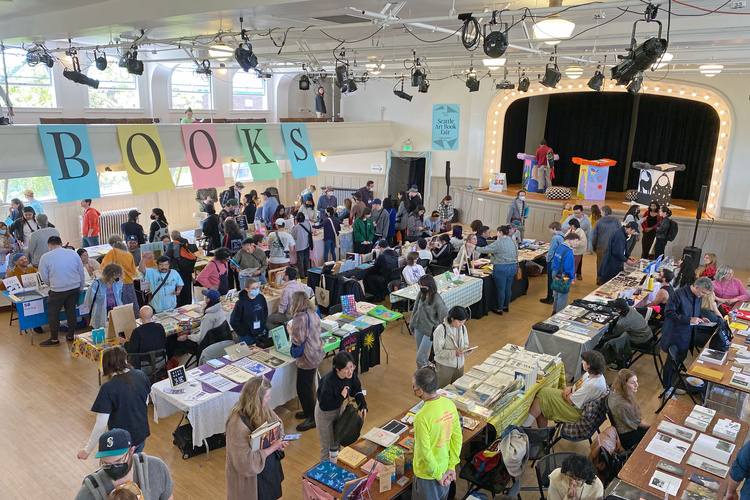
May’s sunshine not only brings out the flowers, it also marks the start of festival season in the Northwest. The 2024 Seattle Art Book Fair recently announced their lineup of 80+ artists, designers, publishers, and for their May 11-12 event at Washington Hall in Seattle.

This free annual festival celebrates independent publishing, book design, and books-as-art. Check their website or follow them on Instagram for more information on the 2024 programs and exhibits at https://www.seattleartbookfair.org/.

Seattle Art Book Fair

SABF’s published list of exhibitors and participants reads as follows:
51 Personae // A is A // A. T. Pratt // Adelaide Blair // afterhours // Alder & Frankia / Impractical Labor (ILSSA) // Amalgam // ANEMONE // Anna Moore // Are Not Books // & Publications // Awkward // Ladies Club // Bad Student / Future Fellow // Robert Baxter & Co. // Benschop Books // Berm // BEST KEPT SECRET // Body&Forma // Bored Wolves // Broccoli // Carletta Carrington Wilson // The Cauldron Press // Chin Music Press // Cold Cube Press // The Corners of Their Mouth Press // Cornish College of the Arts, Design Department // Crackling.Co // Crow Design Studio // Curious Publishing // Current Editions // Ediciones Concordia Mx // Editions // Erika Rier // Errant Press // Fillip // G.U.P.I. // Gelkheht (Yewon Kwon & Benjamin Kraco) // Girl Noise Press // Historical Seditions // HOMOCATS // horse gurl press // Insert Press // Irrelevant Press // Issue Press // Jason Hendardy // Keep On! Creative // Late Night Copies Press // Leobardo Bañuelos Jr // Living Room Press // Mara Gervais // michelle ho // Mirrored Society Books // Moniker Press // Monograph Bookwerks // National Monument Press // NEOGLYPHIC MEDIA // New Documents // Nick Thompson // NIGHTED // Ouroboros Press // Paper Press Punch // Photoverge Studios // play.ground // PM Press // pocket press // Popla1000 // PrintED Studio 印得物工作室 // Raspberry Bow Press // Risolana // RITE Editions // self.img // Set Margins’ // sick sad trans fags // Skylark Editions // Snack Break Studio // Siempre Snack Time & Slow Nights Studio // Sybil Press // Taxonomy Press // Temporary Services / Half Letter Press // Tiny Splendor // Track and Field // UW Division of Design // Wave Books // Winter texts // Wonderfolio // Zine Hug // Zines4Queers // Community Tables: ARCADE Magazine // Books to Prisoners // Center for Contemporary Art // Folio Seattle // The Garfield Messenger // Puget Sound Book Artists // Real Change Newspaper // SPL ZAPP Zine Archive

Celebrating Procrastination in Publisher’s Podcast

Oregon poet, author, publisher, and podcaster Benjamin Gorman decided to do something different with his weekly podcast featuring writers. The result was Writers Not Writing, which has received more than 10,000 views on YouTube and is available for download from all the podcasting platforms. Rather than dive into craft or how to be published like other podcasts, Gorman concentrates on what writers do when they are procrastinating…or perhaps just living a fully rounded life.

We wanted to know more about what Gorman does when he is not podcasting, including his publishing company Not a Pipe Publishing and how the podcast came to be. Following is a recent interview via email.

Please tell us about Not a Pipe Publishing.

Not a Pipe Publishing is an indie press located, fittingly, in Independence, Oregon. We started off publishing exclusively sci-fi and fantasy for adult and YA audiences, but we’ve expanded into paranormal and horror, a thriller, a bunch of anthologies around different themes, and collections of poetry. 

How did you come up with the “Not a Pipe” name?

The name of the company is a reference to René Magritte’s famous painting “The Treachery of Images,” the one with a pipe on it that says (in French), “This is not a pipe.” The painting is about how an image of a thing isn’t the thing itself, and I thought that would be perfect for a company which publishes fiction. One of our central animating principles is that fiction isn’t an accurate description of the world but can tell deeper truths. 

What inspired you to start the Writers Not Writing podcast?

I’d been a guest on many podcasts and a few TV shows, and while I’m grateful to all those interviewers, I found that I kept responding to the same questions about writing process. That’s great for other writers, but I suspected the lines of questioning weren’t very entertaining for readers. I wanted to create a show that is reader-focused, so instead of asking writers about how they write, I ask them how they do something every reader also does: Procrastinate.  I think the show helps readers get to know authors as more well-rounded human beings, and I hope that makes the viewers/listeners more interested in checking out our work. 

How many writers have you interviewed?

As of this writing, we’ve aired 65 episodes, but I try to keep a little ahead, so I’ve recorded 70. It’s been a wonderful experience because I’ve been able to meet these big-name Emmy winners and New York Times best-sellers, and also authors who are just starting out in their careers. I like to keep that mix because everyone has a unique collection of fun procrastination behavior.  

Do you hear any common themes?

One question I always ask authors is what they’ve been daydreaming about, and I’ve appreciated the common recognition that daydreaming, while it can feel like procrastination, is an essential part of the work we do. Authors have fascinating answers ranging from the weirdest flights of fancy to very practical wonderings, and it’s great to contemplate how those inform their work.

What do you think is the greatest challenge facing indie authors and publishers?

I think the publishing industry is going through a transition that’s very similar to what the music industry experienced with the rise of Napster. Before, music was limited to what a small number of gatekeepers allowed. Suddenly everything was accessible, and anyone could throw their music out into the world. That was wonderful for listeners (at first) because there was this glut of great stuff, but it made it so difficult for artists to break out, and then it made it nearly impossible for artists to make a living creating their art. Those pressures then become bad for music listeners (and now readers), because the quantity of work is huge, but it’s being created by people who are essentially donating it to the world. That’s not good for artists of any kind, and when the artists are exploiting themselves, it ultimately isn’t good for readers, either. I suspect that, like iTunes, we’ll eventually settle on some other gatekeeping method that will allow some people to get attention without those decisions being made by a bunch of white, male billionaires picking from among their friends. Instead, it will be white, male billionaires choosing from what they see bubbling up from a much larger pool. That’s still far from perfect, but it will lead to more diverse literature that will be at least slightly more representative of the readers (who are predominantly women and disproportionately people of color) while providing more authors a living wage. I hope indie authors and publishers will play a vital role in that future ecosystem, creating meaningful connections between authors and readers on smaller scales, like the bands that are figuring out ways to make ends meet by doing live shows in more intimate venues rather than selling out arenas and living off of hit albums. We’ll see. I could be overly optimistic. But I hope we’ll find ourselves in a world of more public readings and more intimate signings at small, independent bookstores. It’s a tight time for indie publishers and indie bookstores now, but I really hope the ones who can weather this tenuous time will be the places readers look to when they want to find the voices of their own communities in a future of homogeneous, AI generated schlock. 

For those who want to learn more about Not a Pipe Publishing, where can they find you?

Please come learn more about our authors and their marvelous books at www.notapipepublishing.com We have some great novels we’ll be releasing this year by Amanda Cherry, Beth Gibbs, and Karen Eisenbrey. We’re also publishing our first translation, a powerful collection of poetry by the renowned Mexican poet Verónica Arredondo translated by A.A. deFreese. And we just released a beautiful collection of found poetry and art by Jennifer Rood. There will be cover reveals, launch parties, and signings for all of these, so check out the events page on the site or follow us on any of the social media apps. (We’re on all of them. It’s awful, but we have to go where the readers are, so please follow us to make it worth our while!)

Links to Writers Not Writing can be found at http://www.notapipepublishing.com/writers-not-writing-show.

Lost Loves Books maintains Book Publishers Northwest News. If you’d like to help, you can tip us through PayPal.

Seattle Literary Events Calendar Launched

Seattle City of Literature started a calendar in February “to celebrate the people and organizations that make Seattle a UNESCO designated City of Literature.” Organizations are encouraged to contribute information on “all literary adjacent events open to the public — readings, workshops, open mics, comics classes, discussions, lectures, youth programs, book clubs, residency deadlines, festivals, talks, plays — anything you might dream up that’s “literary” in the loosest sense,” according to the announcement.

Seattle City of Literature aims to email a biweekly digest of all the literary events listed to their subscribers.

“The calendar will also serve as an important way to benchmark the health of our literary community and track all of the events that are happening every year,” said José L. Montero, President of the Board, Seattle City of Literature.

More information about the organization and its new calendar can be found at www.seattlecityoflit.org/community-calendar.

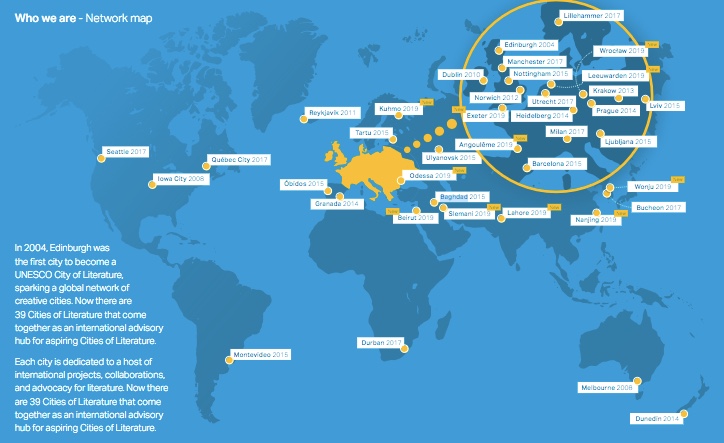
The UNESCO Cities of Literature network of 53 cities represents 6 continents and 39 countries, and a combined population of over 26 million. Seattle received its designation in 2017.

Map of the current Cities of Literature from the UNESCO press kit about the program.

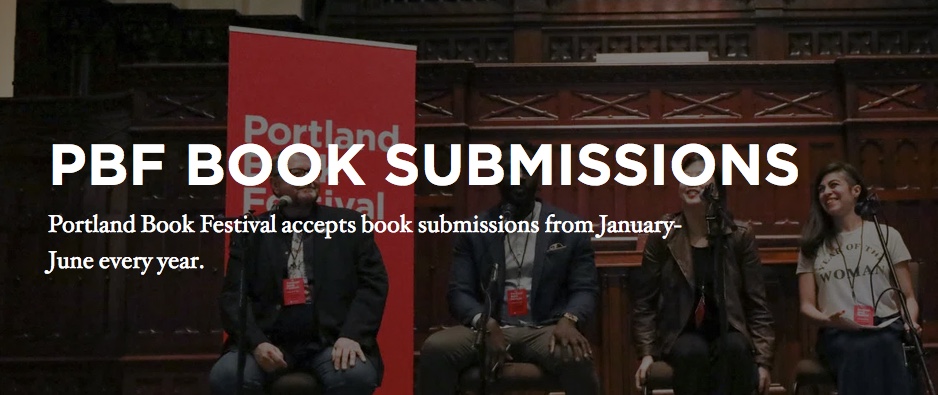
2024 Portland Book Festival Looking For Authors

The Portland Book Festival selects featured books for the November event on a rolling basis from now through June. The 2024 festival is scheduled for Saturday, November 2, 2024. Organizers plan to feature a diverse group of contemporary authors in conversations, panels, and presentations.

Check the Literary Arts website for more details on how to submit your book for consideration at literary-arts.org/about/programs/portland-book-festival/book-submission-guidelines/.

Literary Arts must receive complete submissions by June 14 for consideration. All selected authors will be contacted by September.

Note that the consideration for self-published titles uses the same criteria as traditionally published books. For the 2024 festival, Literary Arts will not accept self-published titles that exist only in ebook format.

Screenshot of Festival’s submission page.

Humanities Montana Supports Storytelling

Humanities Montana is encouraging local historians, cultural knowledge keepers, scholars, and storytellers to submit proposals to expand knowledge and understanding of Montana’s diverse culture and history.

If interested, check the 2024 Mini-Grants and Community Project Grants webpages at humanitiesmontana.org. A recent letter about grant opportunities emphasized the organization is particularly interested in “projects that engage youth in living history experiences.”

Humanities Montana also announced the state’s oldest county library, Chouteau County Library — Fort Benton, received a $500 stipend to support “Community Conversations.” In April, the library will host an “Everyone Reads” book discussion to help community members get to know one another.

Cowboy photo by Yuri B at Pixabay.